
RomeoSEO10 min read
Best SEO Keyword Ranking Checkers in 2026
Compare free and paid SEO keyword ranking checkers, see how accurate each data source is, and pick the right tool for ongoing rank monitoring.
TL;DR
A keyword ranking checker tells you where your pages show up in Google for the terms you care about. Some checkers pull your own data from Google Search Console, others crawl search results themselves, and the numbers they give you will not always agree.
- RomeoSEO: turns GSC-connected rank monitoring into prioritized next SEO tasks; best when you want monitoring to lead to action.
- Google Search Console: free, first-party data, but averages and 16 months of history.
- Semrush Position Tracking: daily updates inside a full SEO suite; priced for teams.
- Ahrefs Rank Tracker: weekly updates, strong competitor view; part of the Ahrefs subscription.
- AccuRanker: real-time, daily rank data on demand; built for agencies and high volume.
- SE Ranking: affordable platform with a free 5-keyword daily checker; from $119/month.
- Mangools SERPWatcher: simple weekly tracking with generous location support; budget friendly.
- Ubersuggest: cheap tracking bundled with keyword research; weekly updates only.
- Moz Pro: on-demand spot checks plus weekly campaigns; read the plan limits carefully.
- Free one-off checkers like Exploding Topics: instant answers for a single keyword; no history.
This is a comparison of public product documentation, not a hands-on accuracy benchmark. Prices and allowances were reviewed on October 27, 2026; confirm the current billing terms before subscribing.
Pick by how you will use the data, not by who has the biggest keyword database. If you only want a quick look, a free checker does it. If you want rankings to drive your weekly SEO work, the data source and the workflow matter more than the feature list.
What a keyword ranking checker does
A keyword ranking checker reports where a page appears in search results for a keyword. A SERP ranking checker answers one question right now: which position does this URL hold today? A rank tracker answers a better question over time: is this keyword moving up or down, and why?
That difference is the whole game. A single check is a snapshot. Rankings move daily, vary by location and device, and differ from person to person. Positions matter because searchers rarely look past the first page of results, so a few places up or down the rankings changes how much traffic a page gets. Ongoing monitoring is what turns position data into decisions, which is the workflow behind our guide on SEO Keyword Ranking: Track, Analyze, Improve.
Where rank data actually comes from
Every checker uses one of two sources, and this explains most disagreement between tools.
First-party data from Google Search Console. GSC shows how real searchers saw your site: impressions, clicks, and average position. It is your data, straight from Google. The tradeoffs are real though. Google keeps 16 months of data, reports position as an average rather than a live rank, and sometimes omits or samples rows. Google's own Search Console performance documentation covers how the report works.
Crawler-based estimates. Tools like Semrush, Ahrefs, AccuRanker, and SE Ranking request search results from Google at specific locations and devices, then record where your domain lands. This gives you live positions, competitor positions, and SERP features. The tradeoff: it is what a searcher in one location saw at one moment, not what every searcher sees.
How accurate are these numbers, really?
Google's documentation defines position as an average across recorded impressions. Personalization and location can change what an individual searcher sees. A tool telling you "position 7" and GSC saying "average 9.4" can both be right.
Practical rules of thumb:
- Treat any single position number as approximate. Watch the trend instead.
- Expect crawler-based tools to differ from each other by a few positions. Different crawlers, locations, and timing produce slightly different results.
- Expect GSC to show impressions for queries that trackers cannot see, especially long-tail terms where you rank outside the top 100.
- If your position differs from what you see in your own browser, that is normal, not a bug. Your browser history, location, and language personalize the results.
The best keyword ranking checkers in 2026
RomeoSEO
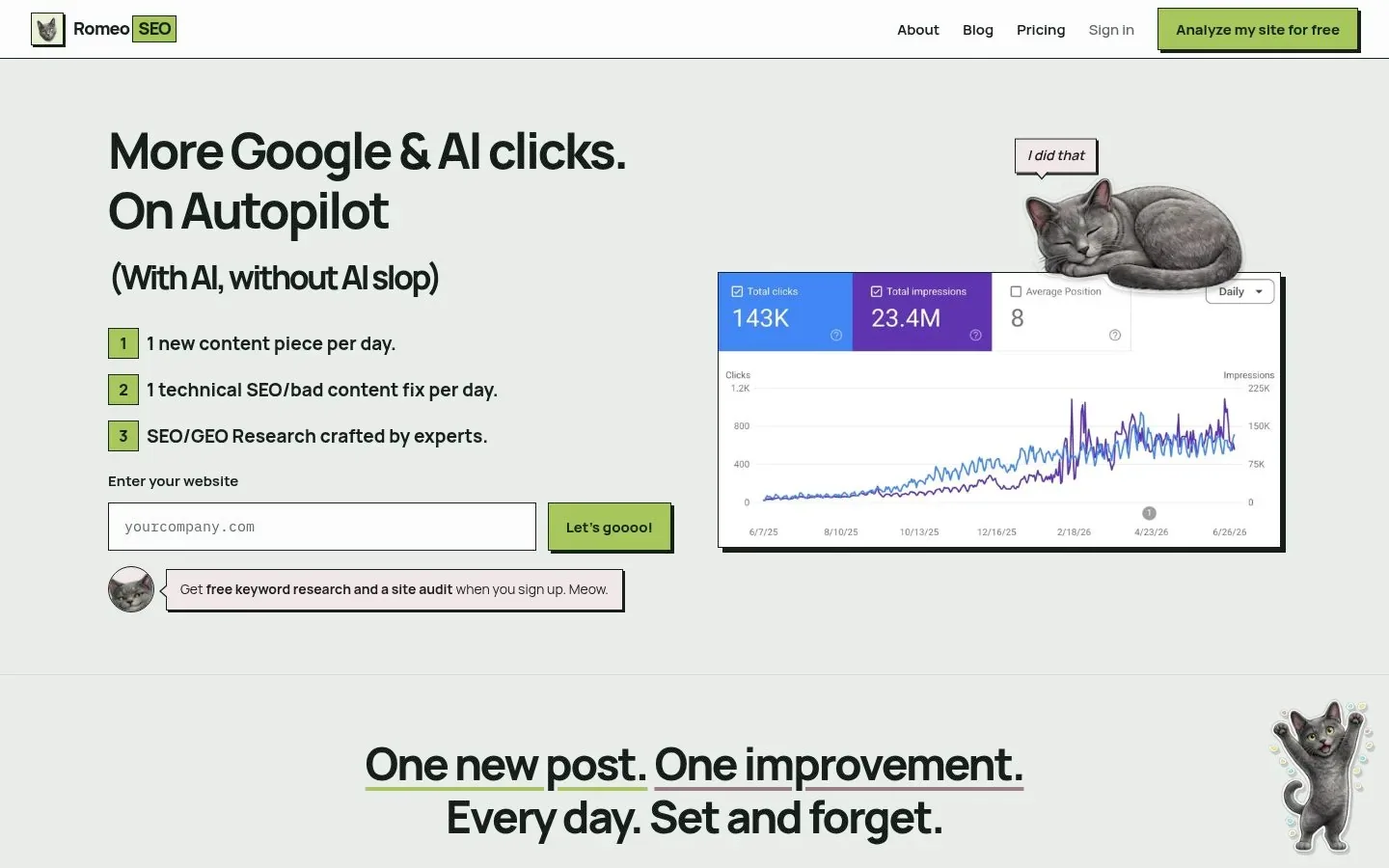
RomeoSEO takes a different angle: it connects your rankings and Search Console data to your actual pages, then uses that to find keyword and content opportunities, prepare new or improved pages, add internal links and images, and hand you changes for review before anything goes live. For sites that want monitoring tied to next actions rather than another dashboard, this is the fit. Its monitoring uses Search Console data to help you pick the next SEO task, which is the question most trackers leave unanswered.
Google Search Console
Google Search Console is free and reports first-party Google Search performance. The Performance report shows impressions, clicks, and average position per query, filtered by country, device, and page. Its limits: 16 months of data, average rather than live position, and no competitor ranks. Every serious SEO workflow should start here, because it shows real traffic outcomes, not just positions.
Semrush Position Tracking
Semrush bundles Position Tracking into its platform. It updates rankings daily, tracks desktop and mobile, covers local and device-level positions, and monitors SERP features. Paid plans include from 500 tracked keywords. The tradeoff is cost and breadth: you pay for a full suite, so it earns its keep if you will also use the keyword research, audits, and competitor tools.
Ahrefs Rank Tracker
Ahrefs offers Rank Tracker as part of its platform, with plans starting around $129 per month for 750 tracked keywords. Its update schedule is weekly rather than daily, but it segments results well: positions 1 to 3, 4 to 10, 11 to 20 and beyond, plus 19 SERP feature types including AI Overviews. If you already run your audits and link research in Ahrefs, adding rankings there keeps everything in one place.
AccuRanker
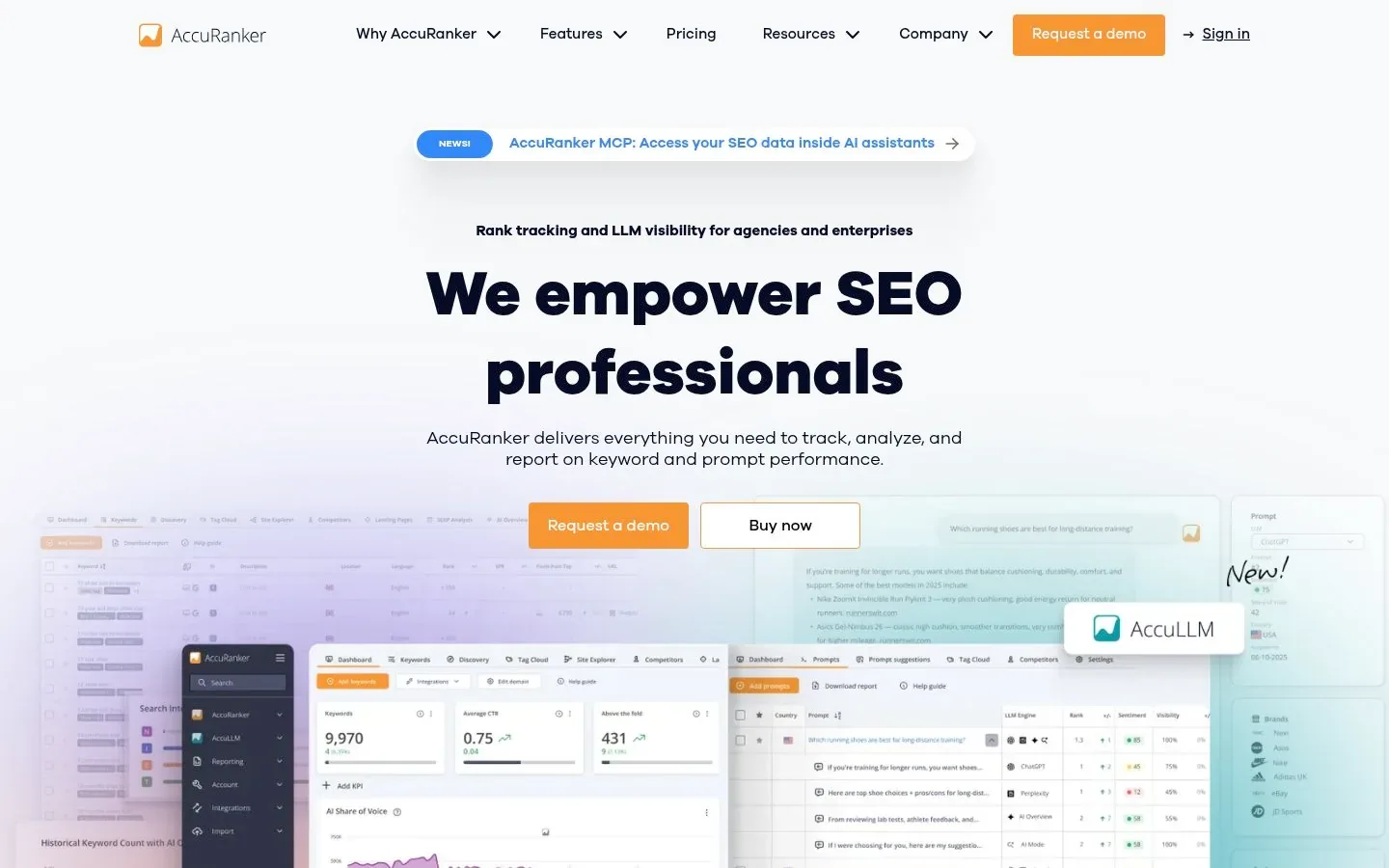
AccuRanker is a dedicated rank tracker, not a suite. It provides daily updates and on-demand refreshes, position data at country, region, and city level, and it handles very large keyword sets across many domains with unlimited users. It also now tracks AI visibility across tools like ChatGPT and AI Overviews. This is the pick for agencies and teams whose main job is rank reporting at volume.
SE Ranking
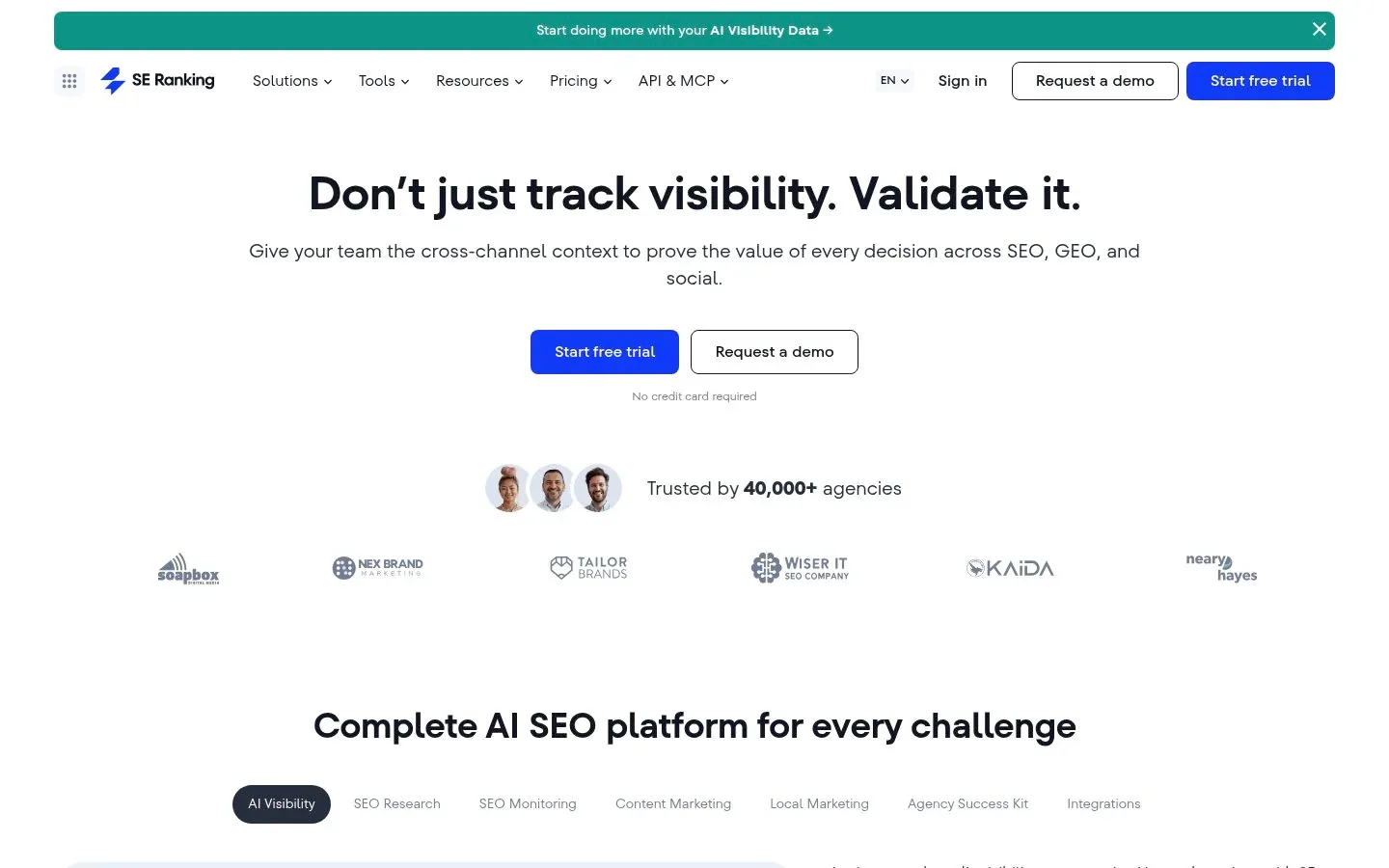
SE Ranking runs a free rank checker that tracks up to 5 keywords daily at no cost, and paid plans that add the full platform start at $119 per month. The tracker covers Google, Bing, and YouTube, desktop and mobile, the top 100 results, and 35+ SERP features, with AI visibility tracking as well. It is a strong middle ground: platform breadth at a lower price than the big suites.
Mangools SERPWatcher
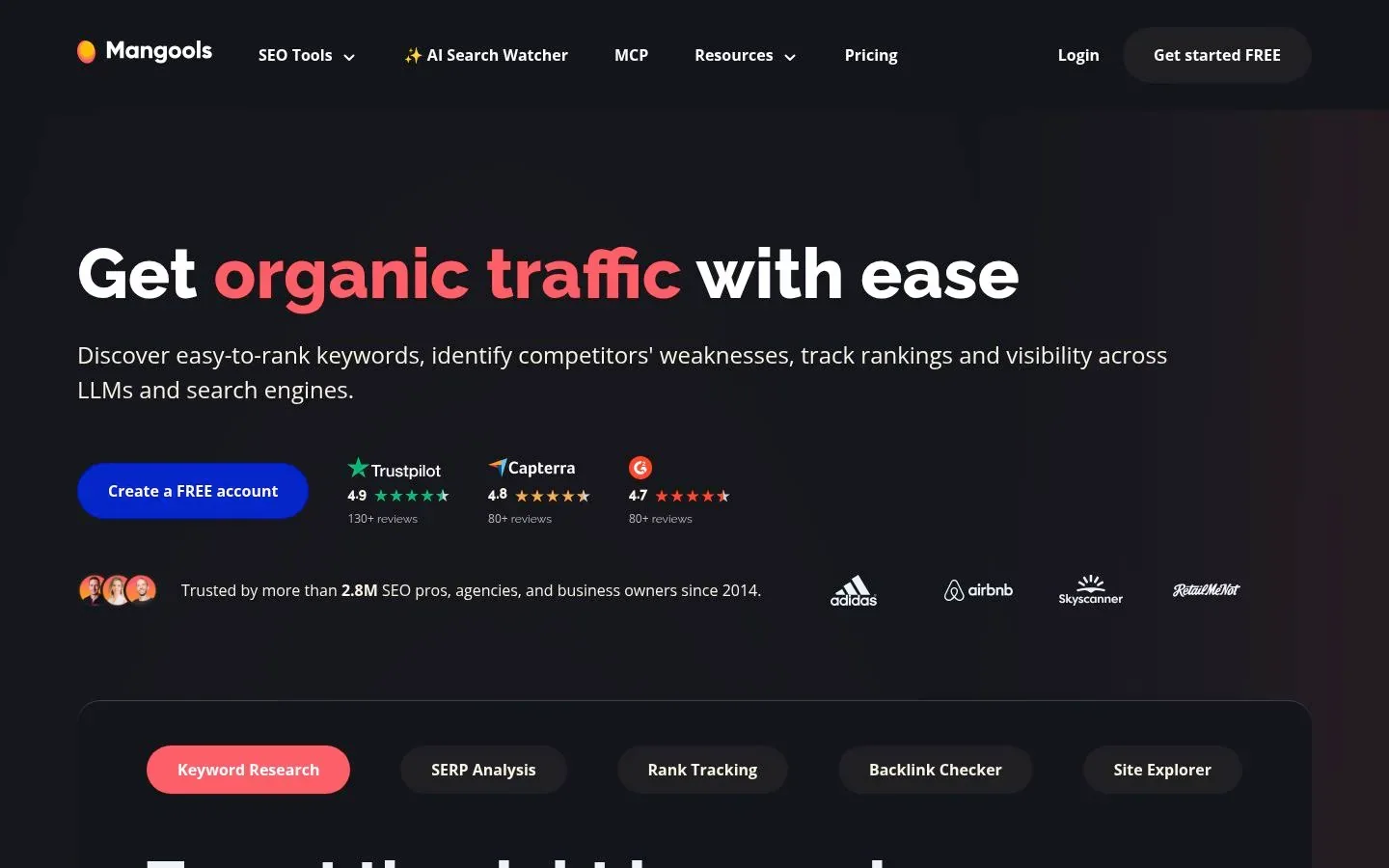
SERPWatcher from Mangools tracks rankings weekly, or daily on the Agency plan, across more than 65,000 locations on desktop and mobile. Its Performance Index summarizes your ranking progress against search volume, and you can import keywords straight from Search Console. Mangools is a focused option for ongoing tracking on a small site, with the obvious tradeoff of a weekly cadence.
Ubersuggest
Ubersuggest includes rank tracking in plans starting at $29 per month, with 125 tracked keywords per project on the entry plan. Updates run weekly across all plans, historical data is kept up to three years, and tracking covers country and city level. It bundles tracking with keyword research at a relatively low entry price. The tradeoff is the weekly schedule and smaller keyword allowances.
Moz Pro
Moz Pro offers two different ranking tools, and knowing the difference saves you money. Rank Checker is for on-demand spot checks, and Campaign Rankings track a keyword set over time on a weekly schedule. The Standard plan tracks 300 keywords; check current Moz Pro pricing for the available entry tiers and billing terms. It suits teams already in the Moz ecosystem; if you want daily updates, look at AccuRanker or Semrush instead.
Exploding Topics keyword rank checker
The Exploding Topics keyword rank checker is a good example of the free one-off style: enter a keyword and a domain, get a position, pay nothing. Tools in the same style include Scalenut's checker and the free Ahrefs rank checker. They share the same limits: no history, no trends, no alerts, and often a small number of checks per day. They are ideal for spot checks and completely wrong for monitoring.
For picking which keywords to track in the first place, a free research tool like Wordtracker helps you build the list before a checker tells you where those terms rank.
Comparison at a glance
| Tool | Data source | Updates | Free option | Typical cost | Best for |
|---|---|---|---|---|---|
| RomeoSEO | GSC-connected | Ongoing monitoring | Waitlist | See site | Turning ranks into tasks |
| Google Search Console | First-party GSC | Ongoing report | Fully free | Free | Real clicks and impressions |
| Semrush Position Tracking | Crawler | Daily | Limited trial | Suite subscription | Teams using a full suite |
| Ahrefs Rank Tracker | Crawler | Weekly | Free checker tool | From ~$129/mo | Ahrefs users |
| AccuRanker | Crawler | Daily, on demand | Free SERP checker | Dedicated tracker pricing | Agencies, high volume |
| SE Ranking | Crawler | Daily | 5 keywords/day | From $119/mo | Budget platform buyers |
| Mangools SERPWatcher | Crawler | Weekly (daily on Agency) | Free tier | Budget bundle | Small sites |
| Ubersuggest | Crawler | Weekly | Trial | From $29/mo | Lowest-cost bundle |
| Moz Pro | Crawler | Weekly campaigns | Check current free access | See current plans | Moz ecosystem users |
| Free one-off checkers | Crawler | One-off | Yes | Free | Quick single lookups |
How to choose a checker for ongoing monitoring
One-off lookups are easy. Ongoing monitoring is where tools differ, so score candidates on this checklist:
- Update cadence. Daily matters when you fight to recover rankings or watch a rollout. Weekly is fine for steady-state sites.
- Coverage. Check your countries, cities, and devices are supported before you buy, not after.
- Keyword limits and cost per keyword. 300 keywords at $99 and 750 at $129 are very different unit costs.
- History depth. Six months of data is thin when you need to diagnose a seasonal pattern.
- Whether data leads to action. A report you never act on is a cost. A monitoring workflow that says "this page dropped, fix it" pays for itself.
That last point is the one worth weighing hardest. Our article on choosing SEO analysis tools covers the same idea for the wider tool stack: the best tool is the one whose output fits into your week. If you want that workflow, monitoring rankings and Search Console data to choose the next SEO task is exactly what RomeoSEO is built for.
Common misconceptions
- "The tool says position 12, but I see my site at 5." Both can be true. Personalization, location, and averaging explain the gap.
- "One check tells me if SEO is working." It does not. One check is weather; three months of checks is climate.
- "A better checker will fix my rankings." None will. Trackers measure; your content and pages do the ranking work.
Frequently asked questions
Is Google Search Console enough as a rank checker? For clicks and impressions, it is the best data you can get. For live positions, competitor ranks, and local views, pair it with a tracker.
Do I need a paid tool? Not always. Start with Search Console and a free checker. Move to a paid tracker when you need daily updates, history, or competitor data at scale.
Next step
Start free: connect Search Console, watch your important keywords weekly, and see which pages move. If you want that monitoring to point you at the next fix instead of just reporting it, join the RomeoSEO waitlist and see how it turns ranking data into reviewable SEO changes.