
RomeoSEO11 min read
9 Best Surfer SEO Alternatives (2026)
Compare nine Surfer SEO alternatives by price, free access, content workflow, and AI-search coverage, including NeuronWriter, Frase, MarketMuse, and RomeoSEO.

Summary of the article
Surfer is a solid content optimizer, but it starts at $49 per month billed annually, and that stings if you publish a few articles a month. There are cheaper options with the same core workflow, plus ways to replace part of Surfer's job with free tools.
- NeuronWriter: low-cost scored editor, from $23/month; basic AI visibility included on every plan.
- Frase: best all-in-one research-to-draft workflow, from $39/month billed yearly.
- Clearscope: a premium option, from $129/month, with AI query tracking on every plan.
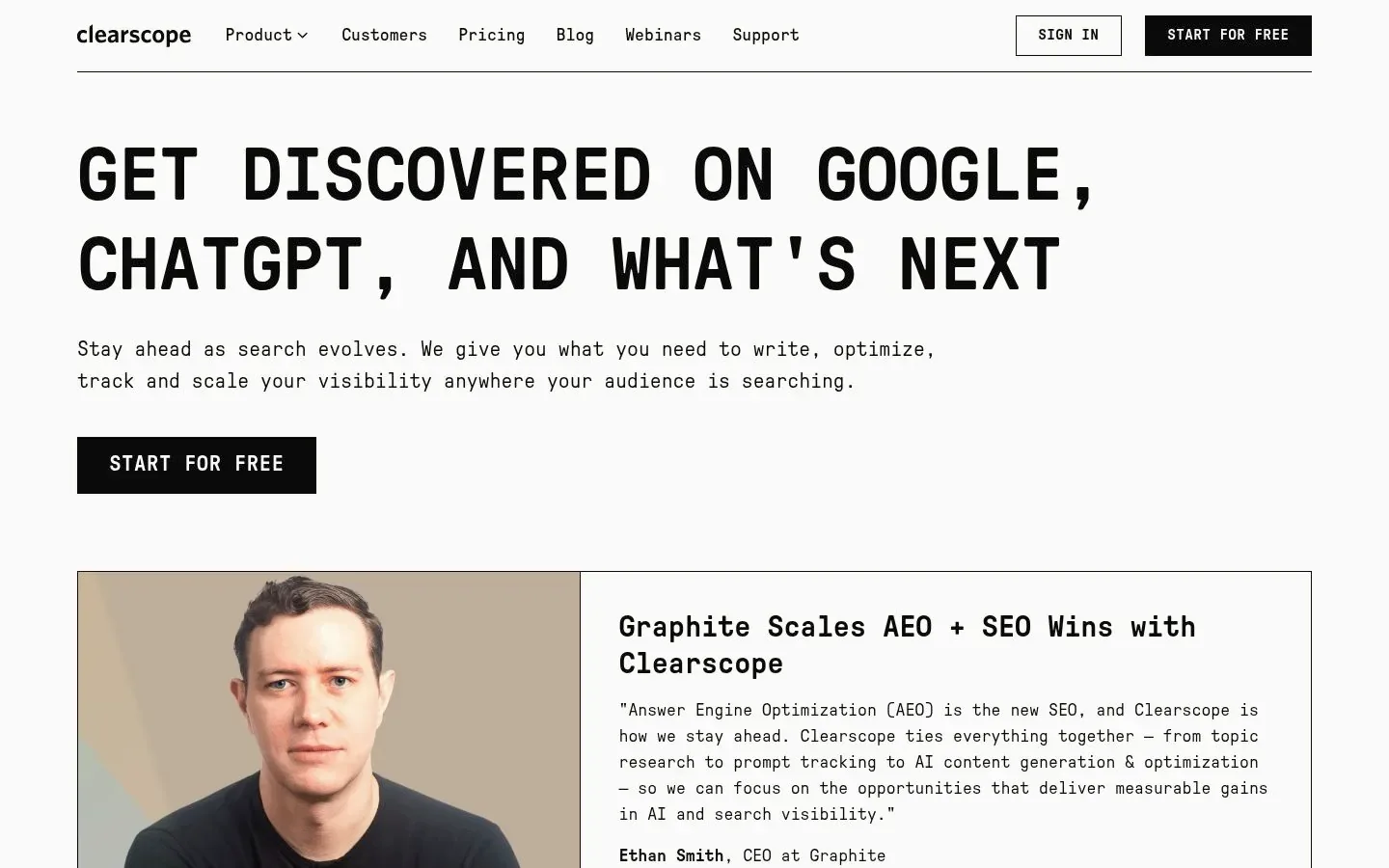
- MarketMuse: free access for topic planning (10 queries/month).
- Scalenut: content plus AI-visibility tracking, from $59/month.
- SE Ranking: optimizer inside a full SEO suite, from $103.20/month billed annually.
- Content Harmony: pay-per-brief workflows, from $50/month.
- Writesonic: built around AI search visibility, from $79/month.
- RomeoSEO: for when execution, not scoring, is your bottleneck; it prepares reviewable changes instead of another editor.
- Free stack: Keyword Surfer, MarketMuse Free, Search Console, and ChatGPT or Claude prompts.
Price is one reason to compare Surfer alternatives, alongside workflow, collaboration, and reporting. This guide matches each option to a different need. It is an editorial comparison based on vendor product and pricing pages checked on October 21, 2026, rather than hands-on lab testing. RomeoSEO is our own product. Billing periods and allowances differ, so re-check the linked plan before buying.
What Surfer actually does
Before you replace it, know what you're replacing. Surfer does three main things:
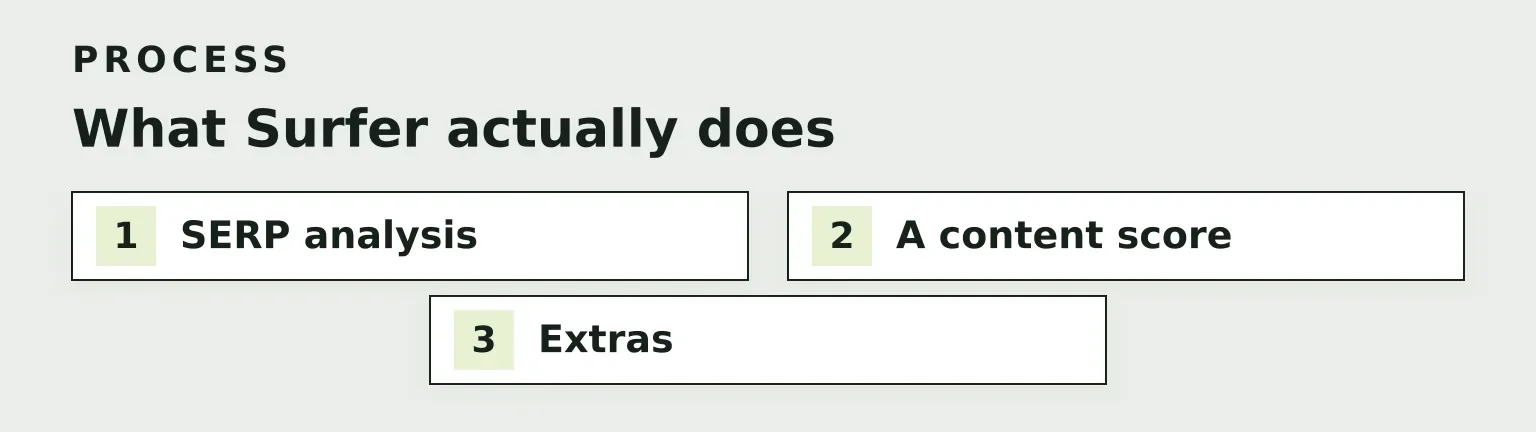
- SERP analysis. It pulls the pages that already rank for your keyword and extracts the terms they use.
- A content score. As you write in its editor, it grades your draft against those terms, headings, and length benchmarks.
- Extras. Keyword research, AI drafting, audits of existing pages, and AI prompt tracking on higher plans.
The core value is the editor. You paste or write a draft, and the score tells you what to add. Anything that replaces Surfer needs that loop: pick a keyword, get a term list, write against a score.
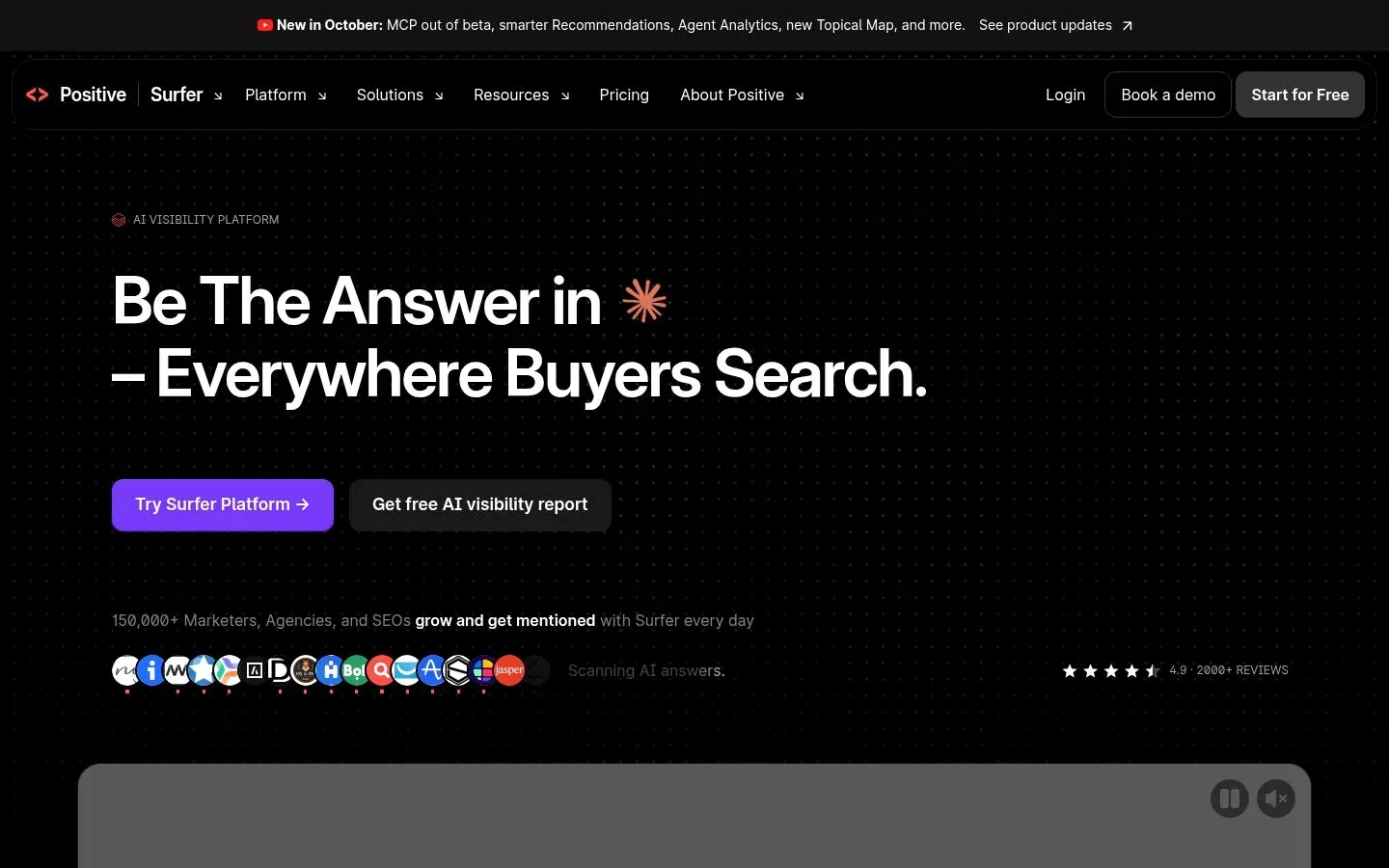
Surfer's entry Discovery plan is $49 per month billed yearly, with a 7-day free trial (Surfer pricing). Standard is listed at $99 per month billed yearly and adds AI-search tracking; check the current prompt allowances and refresh schedule for your chosen plan. If $49 fits your budget, the honest answer is: you may not need an alternative. The rest of this article is for when it doesn't.
The alternatives at a glance
| Tool | Best for | Starting price | Free plan or trial | Standout |
|---|---|---|---|---|
| NeuronWriter | Cheapest serious optimizer | $23/mo | 7-day trial | Basic AI-visibility monitoring on every plan |
| Frase | Research-to-draft in one place | $39/mo billed yearly | 7-day trial, no card | Publishes to WordPress, Webflow, Sanity, or Wix |
| Clearscope | Teams that want AI tracking included | $129/mo | 14-day trial | ChatGPT and Gemini query tracking on every plan |
| MarketMuse | Free access, topic strategy | Free, 10 queries/mo | Yes, a real free plan | Topic and site-level planning |
| Scalenut | Content plus AI visibility | $59/mo | 7-day trial | Tracks ChatGPT and Google AI in every plan |
| SE Ranking | Optimizer inside a full suite | $103.20/mo billed annually; $129 monthly | 14-day trial | Content Editor works in Google Docs |
| Content Harmony | Brief-driven teams, workflow allowances | $50/mo for 5 workflows | $10 for 10 credits | Unlimited users on every plan |
| Writesonic | AI search coverage | $79/mo billed annually | Free trial | Tracks ChatGPT, Gemini, and AI Overviews |
| RomeoSEO | Prepared changes for human review | $69/mo | 3-day trial | Pull requests or CMS drafts instead of a scored editor |
NeuronWriter: low-cost scored editor
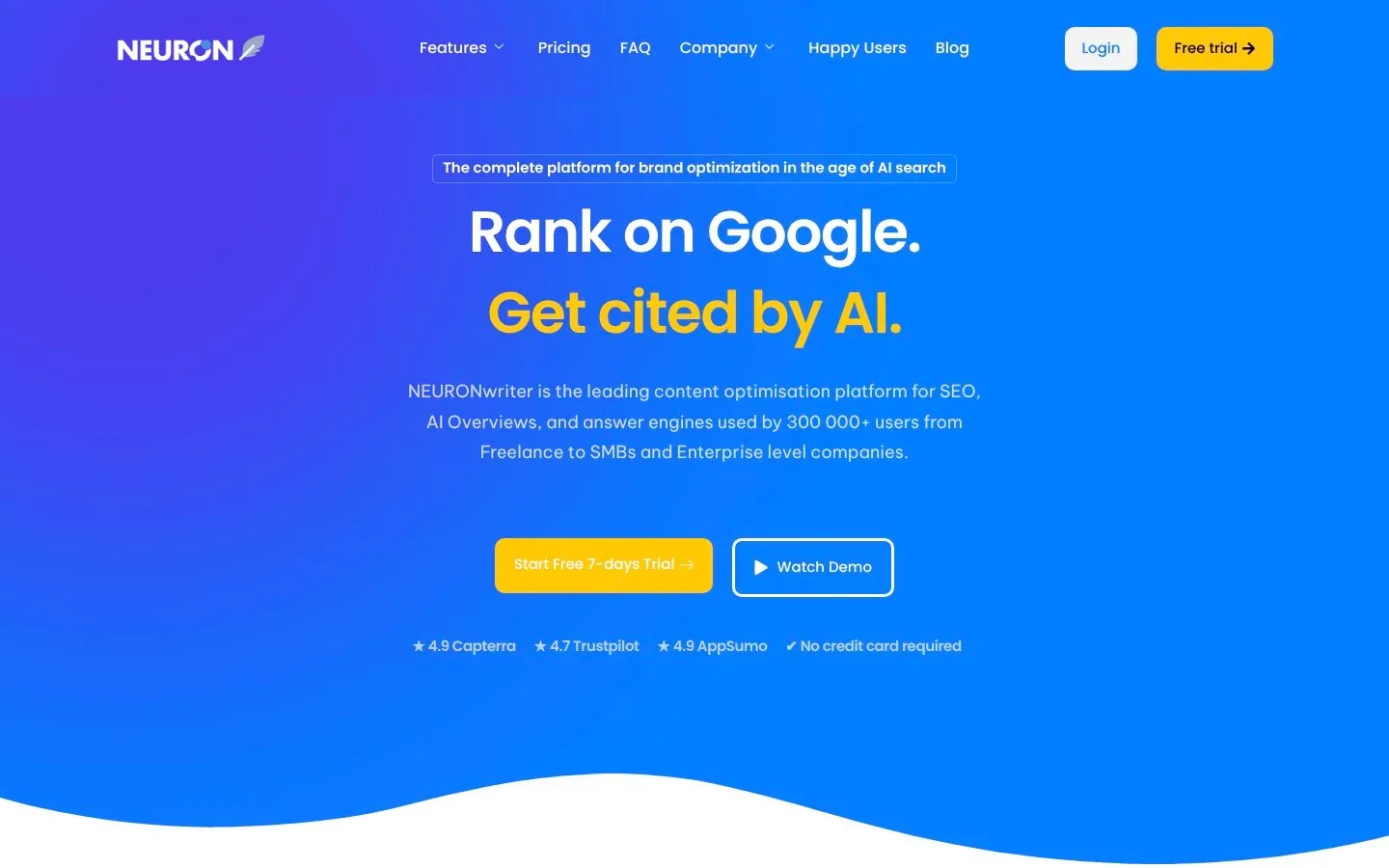
NeuronWriter is the closest thing to Surfer at a fraction of the price. The Bronze plan is $23 per month, with a lower monthly equivalent on annual billing, and includes 25 content analyses, a term list based on competing pages, and a content score, per NeuronWriter's pricing page. You get a 7-day trial with Gold-plan limits.
What you give up: Bronze allows only 2 projects, and features like plagiarism checks, integrations, and team sharing start on higher plans. Basic AI-visibility monitoring (Google AI Overviews and AI Mode) is included on every plan, but tracking ChatGPT and Perplexity requires a paid add-on, per NeuronWriter's AI Visibility FAQ. If you publish a handful of articles a month and want the Surfer loop for under $25, this is the pick.
Frase: best all-in-one research-to-draft workflow
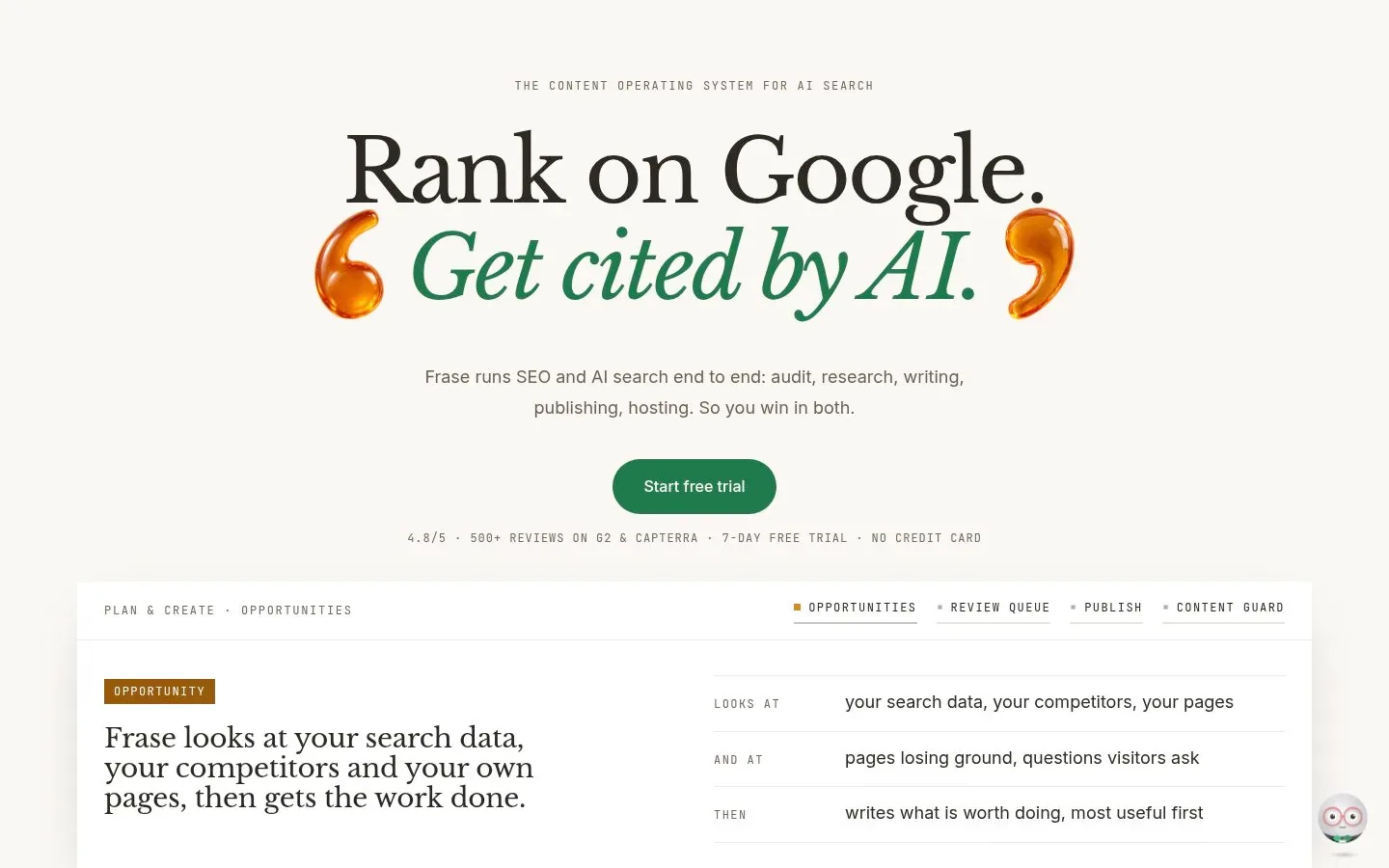
Frase bundles the whole cycle: keyword research, briefs, an AI writer, a scored editor, and publishing. The Starter plan is $39 per month billed yearly ($49 month to month), with 1 seat, 1 site, and 10 articles a month. A 7-day trial needs no credit card, per Frase's pricing page.
Two things set it apart. First, it publishes straight to WordPress, Webflow, Sanity, or Wix, so you skip the copy-paste step. Second, its plans include AI-visibility tracking on ChatGPT and Google AI, which Surfer keeps on pricier tiers. The tradeoff: 10 articles a month fills up fast if you also audit old pages. Best for solo writers and small teams who want one tool instead of three.
Clearscope: premium pricing with AI tracking included
Clearscope is a common step-up choice for agencies and content teams. The Essentials plan starts at $129 per month and includes 50 tracked queries, 20 monthly Topic Explorations, and 20 monthly AI drafts, with a 14-day free trial. Every plan also includes query tracking across ChatGPT and Gemini, plus unlimited users and projects, per Clearscope's pricing page.
That price only makes sense if content is a real revenue channel for you. If you write a few posts a month for a small site, you'd be paying a premium for team-scale limits you may never use.
MarketMuse: free access for topic planning
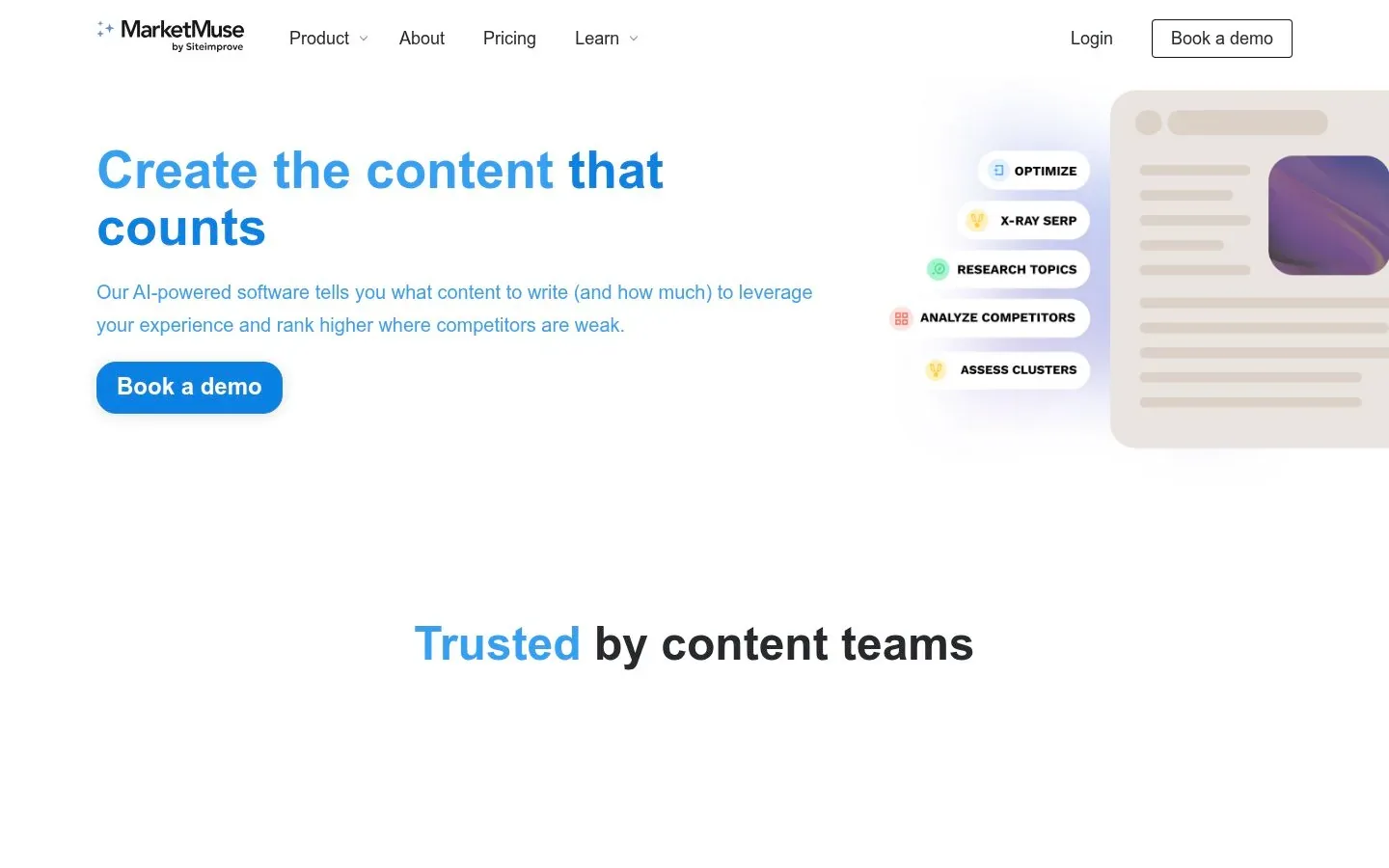
MarketMuse has a real free tier, not a trial: 1 user and 10 queries per month, forever, per MarketMuse's pricing page. Those queries cover keyword research, SERP analysis, and optimizing a draft. For a site publishing one or two articles a month, that can be all you need.
The limits are sharp. There are no content briefs, no tracked topics, and no site inventory on the free plan, and MarketMuse advertises no AI-visibility tracking. Paid tiers are quote-based and aimed at bigger programs. MarketMuse is strongest on topic strategy: deciding what to write next across a whole site, not just scoring one page. If your budget is zero, start here.
Quick takes on four more options
Scalenut
Scalenut has repositioned around GEO, optimizing content for both Google and AI answers. Every plan tracks AI visibility on ChatGPT and Google AI Overviews; Starter is $59 per month with a 7-day trial, per Scalenut's pricing page. Good fit if you care about AI answers as much as rankings.
SE Ranking
SE Ranking is a full SEO suite with a Content Editor that works inside Google Docs. The current Core plan is listed at $103.20 per month billed annually ($129 month to month) on SE Ranking's subscription page. Its Content Editor provides content scoring and readability guidance. Check content allowances and any add-on charges for your intended workload. Its AI Visibility Tracker covers ChatGPT, Gemini, AI Overviews, and AI Mode, per SE Ranking's AI visibility page. Best when you want rank tracking, audits, and an optimizer from one vendor. Use a representative draft to compare the recommendations with your current editor.
Content Harmony
Content Harmony sells content workflows, not subscriptions per seat: keyword report, brief, and grader for one page. The smallest plan is $50 per month for 5 workflows, and a $10 trial gets you 10 credits with no auto-renew, per Content Harmony's pricing page. Its grader scores drafts against a topic model, but the deepest AI tie-in we found is AI Overviews previews inside keyword reports, not brand-level tracking, per Content Harmony's AI Overviews update. Best for teams that brief freelancers, since every plan includes unlimited users.
Writesonic
Writesonic now leads with AI search visibility: tracking how ChatGPT, Gemini, and Google AI Overviews describe your brand, then generating articles to fix the gaps. Starter is $79 per month billed annually, per Writesonic's pricing page. Choose it when AI answers matter more to you than the classic content score.
Surfer SEO alternatives free: a DIY stack
If the answer must be $0, you can cover most of Surfer's day-to-day work with four free tools. It can support research, outlining, and performance review, though you must connect the steps yourself.
- Keyword Surfer. Surfer's own free Chrome extension shows search volumes and keyword ideas inside Google results, with no Surfer account needed, per Surfer's extension page.
- MarketMuse Free. Ten queries a month for term lists and optimization checks, as described above.
- Google Search Console. Free data on which queries your pages actually appear for. Use it to find pages that are slipping.
- ChatGPT or Claude prompts. Paste the top-ranking pages' headings into an AI chat and ask for a term list and outline. It approximates Surfer's brief, just manually.
The gap is integration: MarketMuse can help optimize a draft, but the tools do not share one research-and-writing workspace. You do the data stitching yourself. If you go this route, our guide to on-page SEO optimization covers what the editor would otherwise remind you to check. MarketMuse's free tier is a limited ongoing plan; distinguish it from the time-limited trials offered by paid editors.
What each tool tracks in AI search
AI coverage used to be a rare feature; now most of these tools have something. What differs is which engines they watch and which plan it lives on:
- Surfer: its pricing page lists content plans and a separate AI Search Analytics option. Check the included engines, prompt allowances, and refresh frequency for your chosen plan on Surfer's pricing page.
- NeuronWriter: basic monitoring (Google AI Overviews and AI Mode) on every plan; ChatGPT and Perplexity need the paid Advanced add-on, per NeuronWriter's FAQ.
- Frase: AI-search visibility tracking is included from the entry plan, per Frase's own comparison page.
- Clearscope: ChatGPT and Gemini query tracking on every plan, per Clearscope's pricing page.
- Scalenut: AI visibility on ChatGPT and Google AI Overviews in every plan, per Scalenut's pricing page.
- Writesonic: ChatGPT, Gemini, and AI Overviews tracking is the headline feature, per Writesonic's pricing page.
- SE Ranking: AI Visibility Tracker across ChatGPT, Gemini, AI Overviews, and AI Mode, per SE Ranking.
- MarketMuse: no AI-visibility tracking advertised; the free plan centers on keyword research, SERP analysis, and site heatmaps, per MarketMuse's pricing page.
- Content Harmony: AI Overviews previews inside keyword reports, but no brand-level tracking we could find, per Content Harmony's update.
Whether this matters depends on how much of your traffic now comes from AI answers. Our guide to AI search optimization tools walks through how to compare that side of the market. One more honest note: no content optimizer, including Surfer, guarantees rankings. Scores and visibility reports should inform editorial decisions rather than replace checks for factual accuracy and usefulness.
When scoring isn't the bottleneck
Many of these tools center on scoring or reporting; several also draft and publish content. Compare how much of the complete workflow each one covers: choosing an opportunity, writing, checking facts, adding images and links, and approving publication. For a one-person site that's fine. For a site with hundreds of pages, the bottleneck is usually execution, not the score.
That's the problem RomeoSEO approaches differently. It uses your pages, rankings, and Search Console data to find opportunities, prepares new or improved pages with images and internal links in your brand voice, and delivers the changes as pull requests or CMS drafts that you approve before anything goes live. If you'd rather review finished changes than grade drafts in an editor, that's a different category than the tools here. Our guide on choosing SEO automation software breaks down how to evaluate that kind of tool.
Which Surfer alternative should you pick?
Match the tool to your actual constraint:
- Tight budget, keep the Surfer loop: NeuronWriter ($23/mo) or Frase ($39/mo billed yearly).
- Budget of zero: MarketMuse Free plus the DIY stack above.
- Team that briefs writers: Content Harmony or Clearscope.
- Want one suite for everything: SE Ranking.
- AI answer visibility is the priority: Writesonic, Scalenut, Frase, or Clearscope.
- Execution is the bottleneck, not scoring: automation like RomeoSEO.
Start with a trial, run one real article through it, and compare the finished draft to what you'd get in Surfer's editor. That single test tells you more than any feature list. For more comparisons and practical guides, browse the RomeoSEO blog.
And if your goal is fewer hours per published page rather than a cheaper score, join the RomeoSEO waitlist and get on the list while the product prepares for launch.